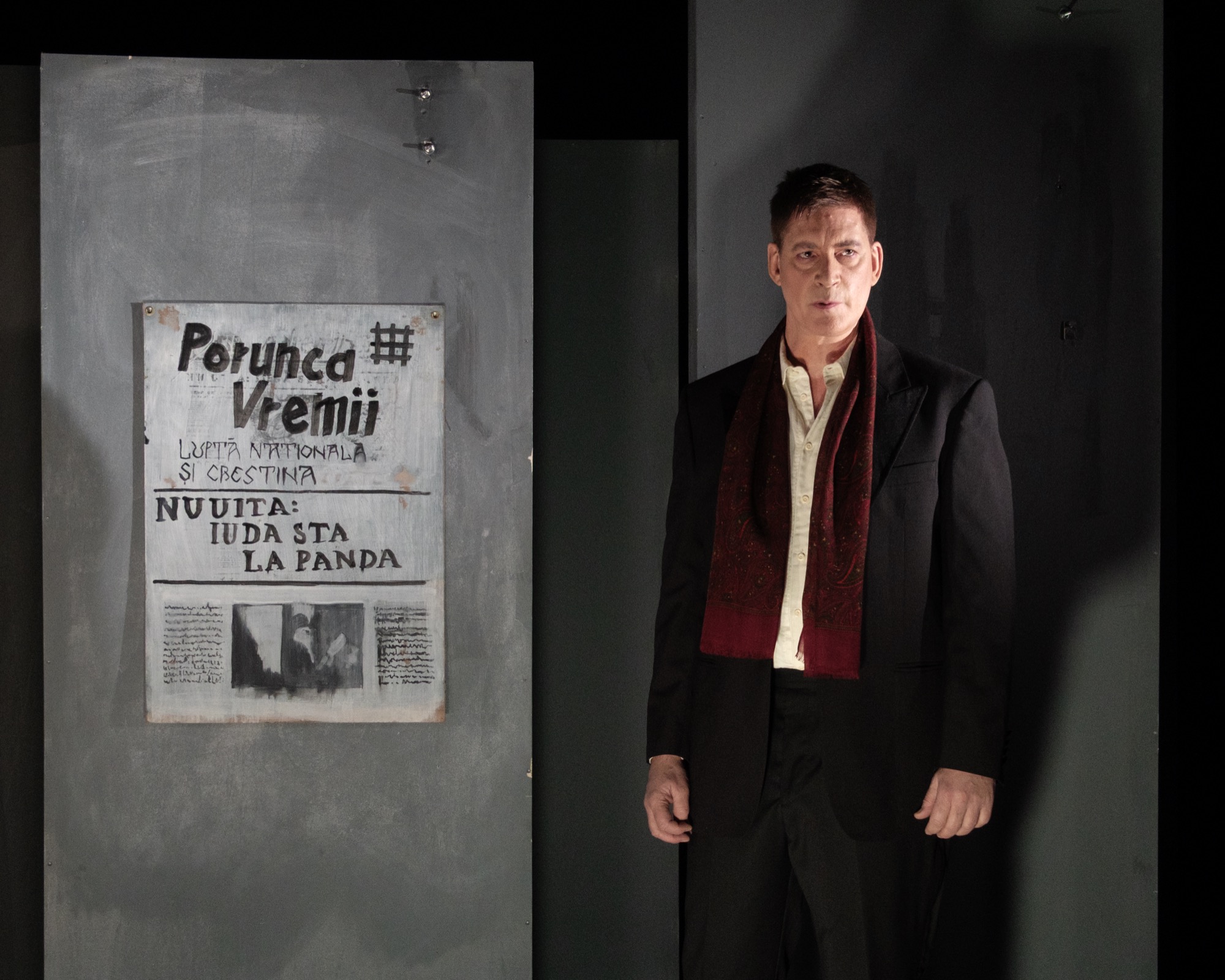
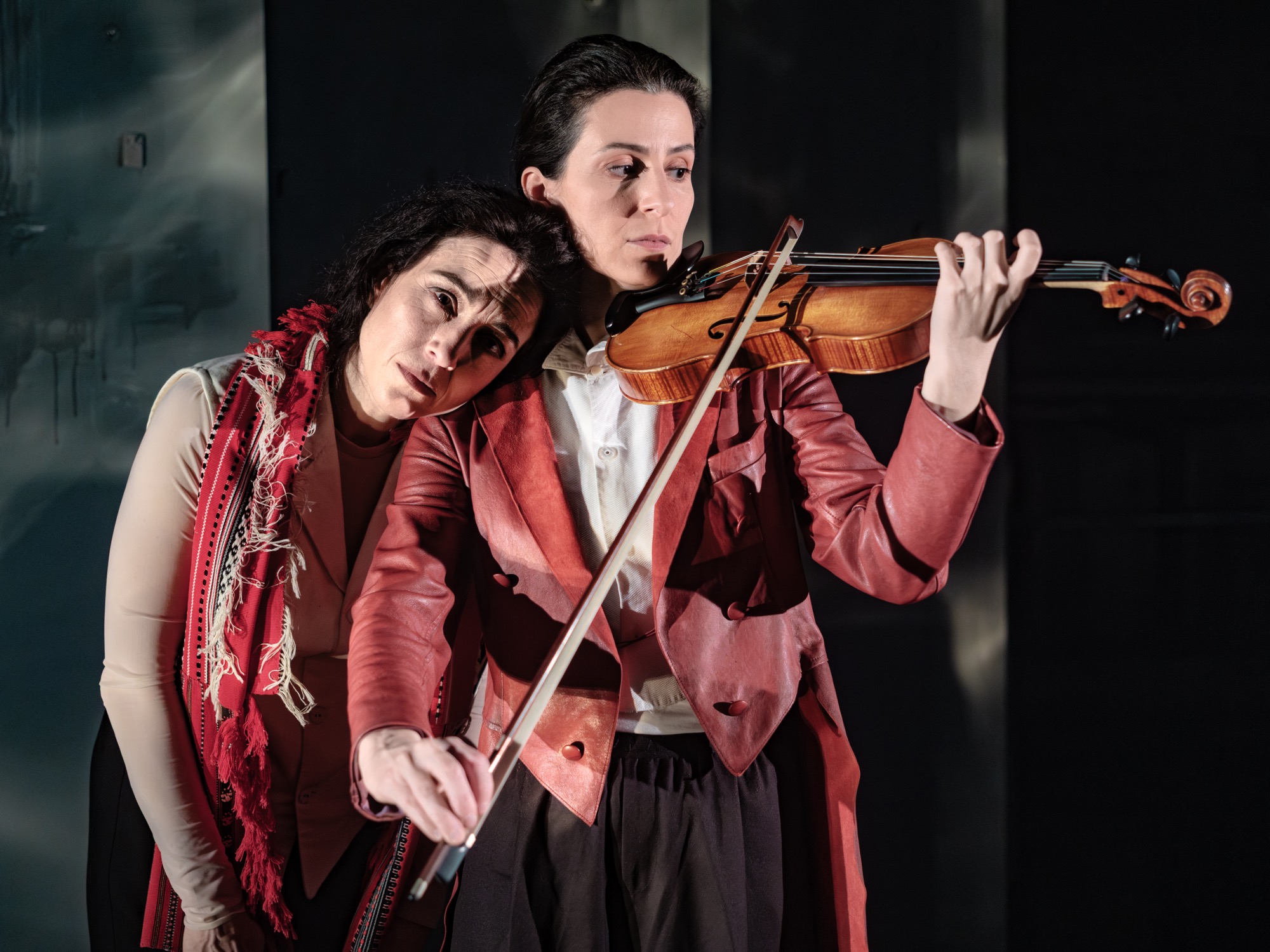
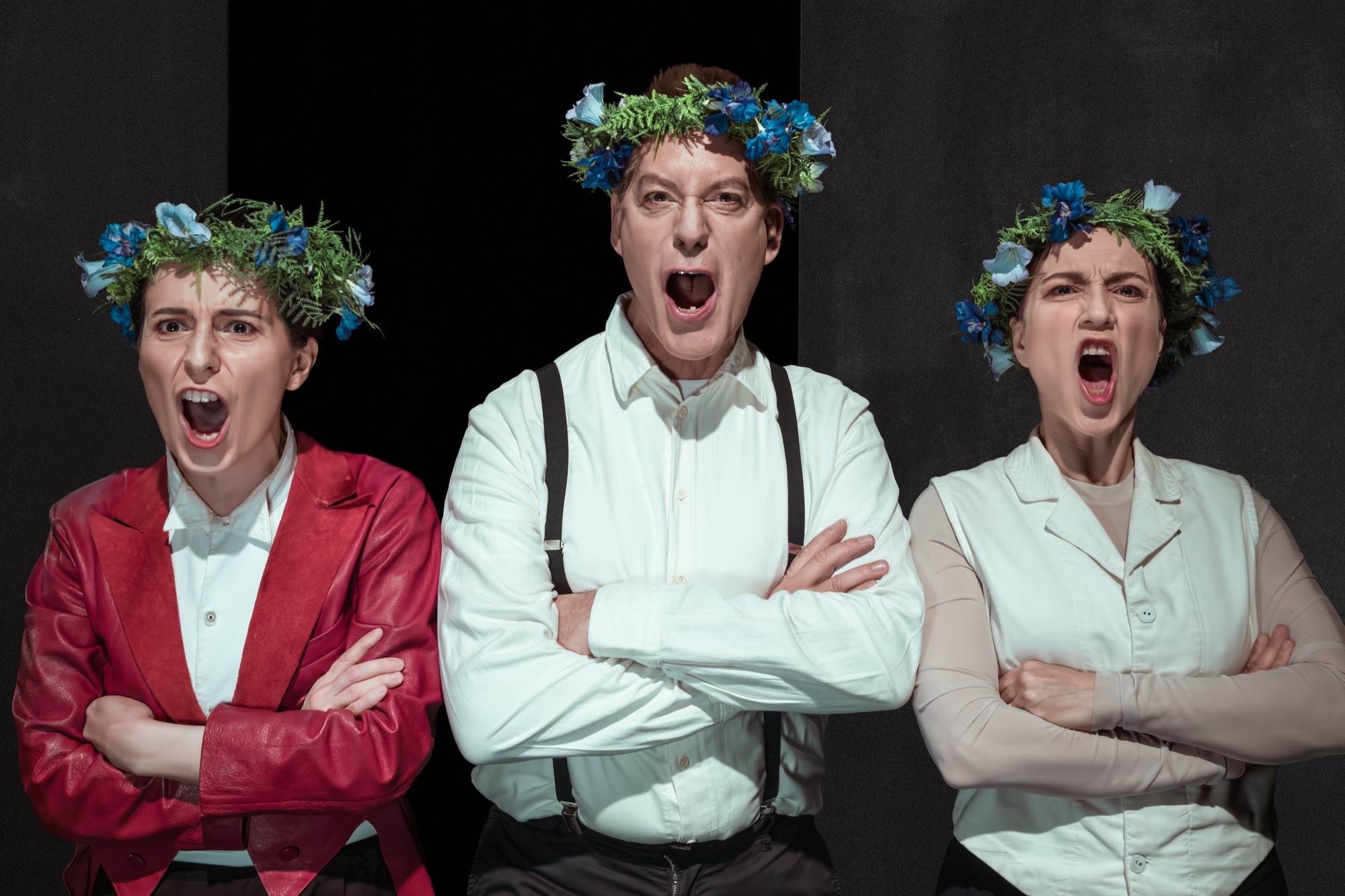
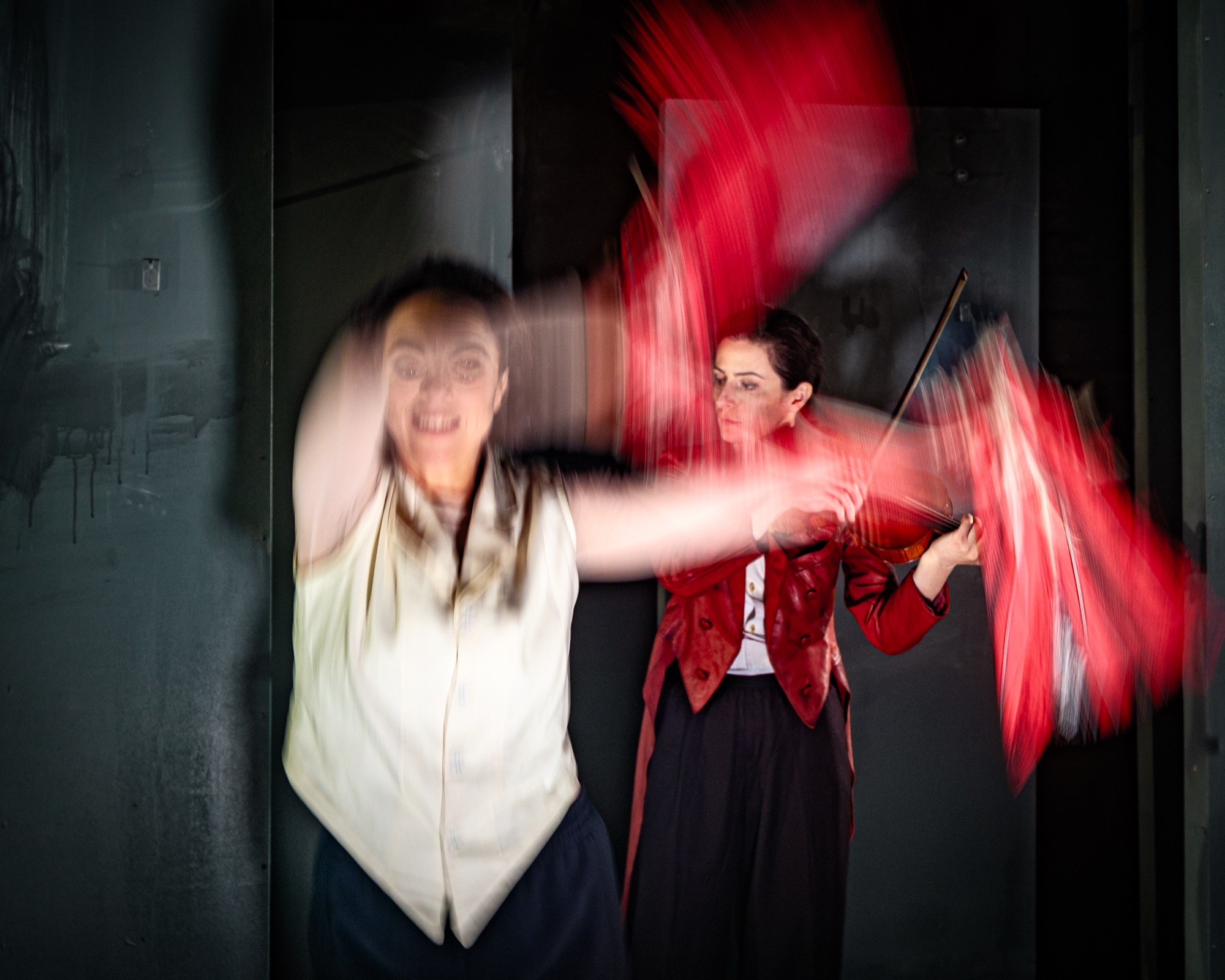
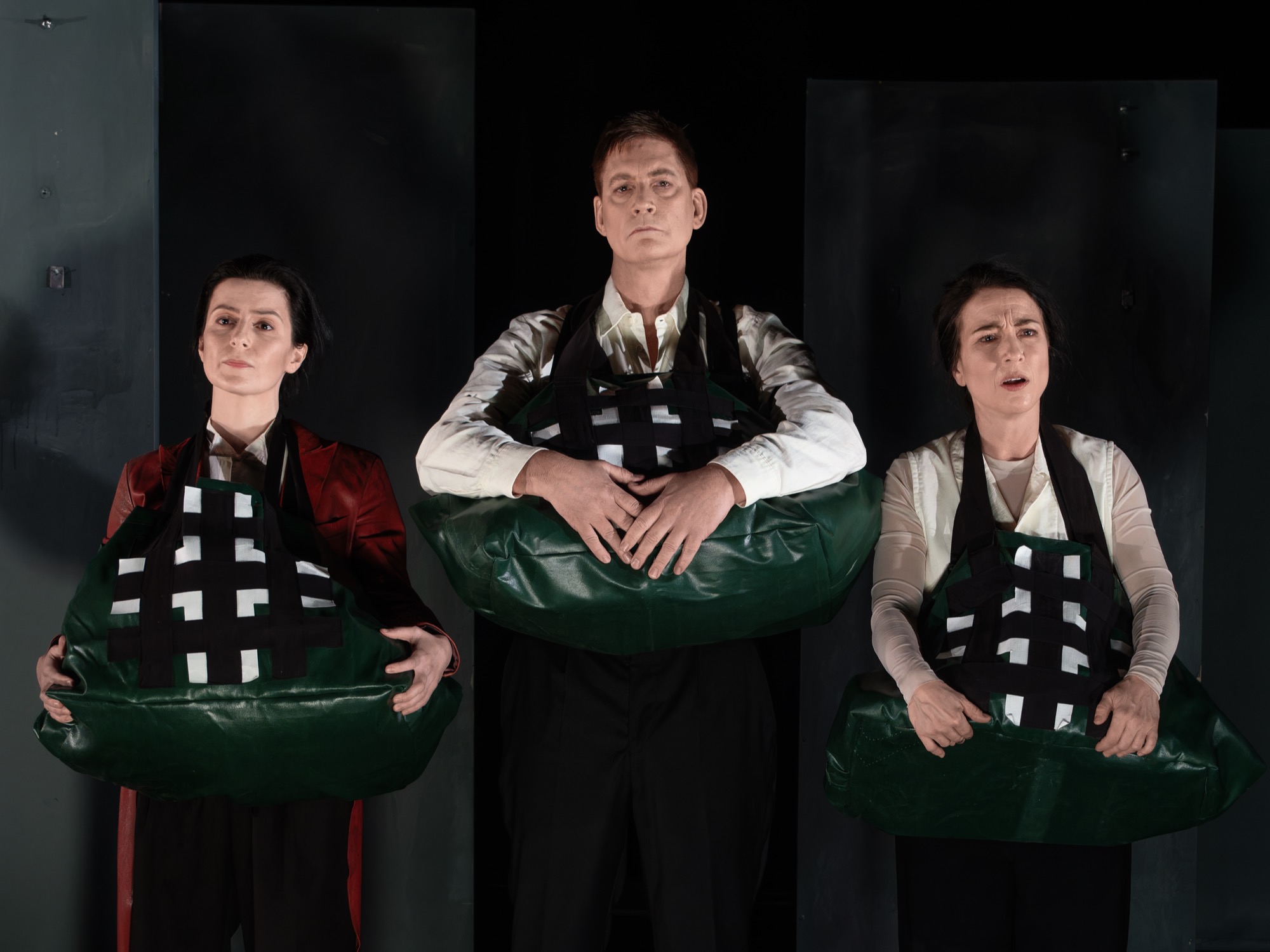
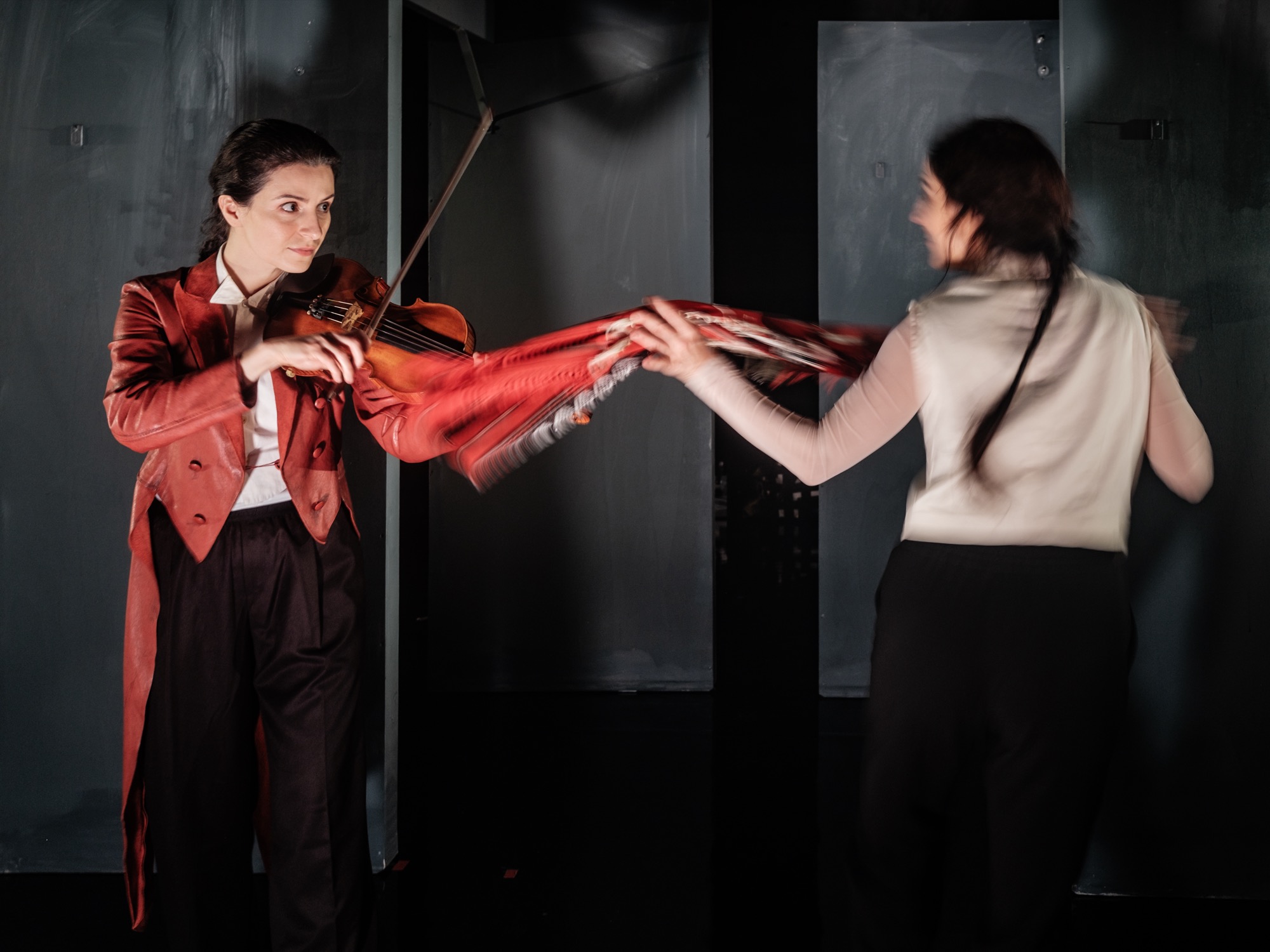
Fascism does not seize power with a spectacular blow. Fascism settles gradually, persistently, like a drop digging into a stone. And when the crisis has been triggered, all that remains is to complete the takeover of power – through violence and the promise of simple solutions. The Father, the Pogrom and the Parallel is a show about how quickly, and seemingly without obstacles, the language and mentality of a society can change and about how what initially seemed inconceivable suddenly becomes natural.
The show starts from the search of actress Adriana Savin to reconstruct the life of her father, a young Jew from Bucharest, and the story of his survival during World War II. The artistic approach is also inspired by the Diary 1935–1944 that Mihail Sebastian wrote during a period when Romania had adopted Nazism as an ideology – but also by the observation of anti-democratic trends in the present.
How can prejudice turn into genocide? And what is it like to be the child or grandchild of a generation that survived war and persecution, but never wanted to talk about it?
The twenties then and now
Romania, 1923: Democracy seemed to have a promising future. The constitution guaranteed equal rights to all citizens, including Jews, Roma, and other minorities. Twenty years later, genocide – the Holocaust – had become a reality, and Romania had been the scene of some of the most violent pogroms in the world, directed primarily against Jews.
Europe, 2026: we speak and think differently than we did just ten years ago. The boundaries of what is considered acceptable have changed. And our society and the times we live in are becoming more radical – step by step.
Quotes from the Swedish press
"The play covers a hundred years of history and does not hesitate to show us the similarities between the escalation of street violence during the pogroms and the fanatics of today's Europe." Dagens Nyheter
“A deeply disturbing and personal account of timeless mechanisms … a model that shows us how prejudice and the need for scapegoats can grow to proportions that defy all reason.” Svenska Dagbladet
"The distribution offers us a history lesson that makes it impossible to avoid the parallels between the political drift of the past and the present, towards an assumed fascism." Flamman
A show about the Holocaust in Romania and about Europe today.